Density and Your Community
Dense developments help use existing resources most efficiently and creates more value for the community in numerous ways, especially compared to the suburban sprawl created by single access single family neighborhoods. Density provides a variety of benefits to our communities:
DENSITY REDUCES INFRASTRUCTURE COSTS
It is cheaper to serve more households in a smaller, denser area than to serve the same number of households across a larger, dispersed geographic area. The EPA states that the comparable figures for utilities are 58 percent less to build and 30 percent less to maintain in dense developments. Communities are recognizing the redundancy of paying for new infrastructure when existing infrastructure is underutilized.
DENSITY REDUCES SPRAWL, ENABLING PROTECTION OF OPEN SPACE AND PARKLAND
Density allows communities to accommodate greater amounts of development on a given parcel(s) of land. This compact development relieves some of the pressure to develop open spaces. As a result, communities are able to preserve existing open space, create internal neighborhood parks and protect environmentally-sensitive lands.
DENSITY MINIMIZES AIR POLLUTION AND PROTECTS WATER QUALITY
Since higher density communities can provide greater transportation choice, it is often the case that their residents drive less. Also, with activities closer together, vehicle trips are shorter – with less vehicle miles traveled, less pollution is produced. Density protects water quality by minimizing the impervious surface per household. This in turn reduces storm water runoff.
DENSITY MAKES WALKABLE NEIGHBORHOODS
Walkable neighborhoods have possible residential and nonresidential land uses close to each other. Shops, houses, restaurants, schools, etc. are located within close proximity to each other, providing people the convenience to go out to eat, walk to school, or purchase a quart of milk within a 5-10 minute walk. This is more important than ever, as more employees are working from home.
Retail vs. Mixed-Use Tax Generation Examples
Mixed use density creates exponential property tax income!
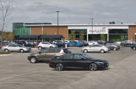
9.0 ACRES
TAXES: $288,269
$32,030 PER ACRE
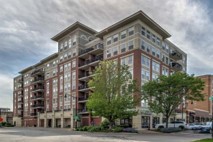
6.19 ACRES
TAXES: $1,403,831
$226,790 PER ACRE
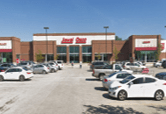
5.48 ACRES
TAXES: $110,006
$20,074 PER ACRE
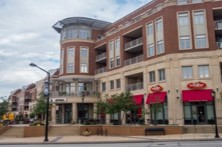
6.0 ACRES
TAXES: $2,651,902
$441,984 PER ACRE
For cities and towns facing tight budgets — just about everywhere in the United States right now — the smart way to boost tax revenue is to encourage mixed-use, walkable development, as the above graphic amply illustrates. The lifeblood of a local government’s budget is property taxes. Developable land is not infinite. It is limited by municipal boundaries, and more importantly, by the cost to make it developable. Let’s reframe the way we look at land. We don’t have to reinvent the wheel; we just have to use the development pattern that has proven itself to grow value over time. Additionally, getting a handle on sprawl actually saves taxpayers money, as it simply costs less to provide infrastructure (such as streets, schools, flood control or sewers) and services (like police and fire protection) to denser, more contiguous households than to far-flung, low-density communities.
 Downtown Gather & Grow